Why Dr. Jane Goodall’s Passing Made Me Choose Pessimism at the UCI Conference
The annual flagship conference at the UCI Center for Digital Transformation, a convergence of industry leaders and forward-thinkers, culminated in a stark question posed by Professor Vijay Gurbaxani: “Are you feeling optimistic or pessimistic?” For the first time, I found myself squarely in the pessimistic camp.
This shift wasn’t just born from the day’s debates. Halfway through the event, the news broke of Dr. Jane Goodall’s passing. It was a deeply sinking feeling, a visceral, “oh no, who will be the voice for conservation and love for the planet now?” Her legacy is immense, a colossal beacon of hope and action, and her departure leaves a void that will be felt for decades. That loss, set against the backdrop of conversations dominated by the sheer scale of current socio-political, economic, and technological challenges, cemented my perspective.
This morning, seeing the numerous dedications to her, I found myself processing the anecdotes and insights gathered over a day and a half with global leaders at the UCI Center for Digital Transformation Conference. They coalesce into a complex picture of progress marred by profound ethical and structural questions, a technological acceleration running far ahead of our collective conscience.
The Stories Behind the Data
The conference opened with State Street Chief Economist Simona Mocuta’s view on the economy, urging us to look beyond high-level metrics. The low unemployment rate, for example, feels like a success story, but a deeper dive reveals that people are increasingly working multiple jobs and longer hours, ultimately leading to less overall consumer spending. This observation became a powerful lens through which to view the rest of the conference: that which looks good on the surface often hides complex, often troubling, human stories beneath.
The $400 Billion Footnote
Nowhere is this divergence more striking than in the conversation around Large Language Models (LLMs). The fact that these models, the engine of the current AI boom were built on a mountain of uncompensated internet and private data is treated as a mere footnote. There is a deafening silence around the minimal acknowledgement, let alone compensation, for the countless creators whose work fuels this technology.
While one high-profile lawsuit did result in Anthropic agreeing to a multi-billion dollar settlement with authors, this pales in contrast to the hundreds of billions being poured into these tech companies. In fact, $400 billion has been invested in AI companies and infrastructure this year alone, an amount larger than the economies of many nations. This number is projected to grow to a staggering $7 trillion by 2030.
Why has this become acceptable? Why are we not aggressively pushing for transparency on energy consumption from the data centers powering this revolution? Why is the blueprint for future AI not built on an ethical foundation of paid, transparently-sourced data? This is not a technical challenge; it is a crisis of ethical priorities.
The Chasm of Expectations
The third major observation was the striking dichotomy among executives: a profound belief in AI’s transformative potential, a “never before seen” level of impact, and yet, the progress in the past three years does not match their expectations. Since ChatGPT first forced executives to consider LLMs in 2022, real business transformation has been slow, with tangible value only realized in narrow use cases.
It is not a binary outcome, of course as Ewan Lowe, EVP Engineering at Pimco pointed out in the panel I moderated. We see steady, focused progress: companies sorting out data governance, hiring AI chiefs, embracing tools like Copilot for engineering efficiency, and testing the limits of “vibe coding.” Robin Gordon, newly appointed CDAO at Hippo Insurance and Mary Burke, SVP HR Experian both shed light on progress in two of the most critical factors in AI transformation - data and culture.
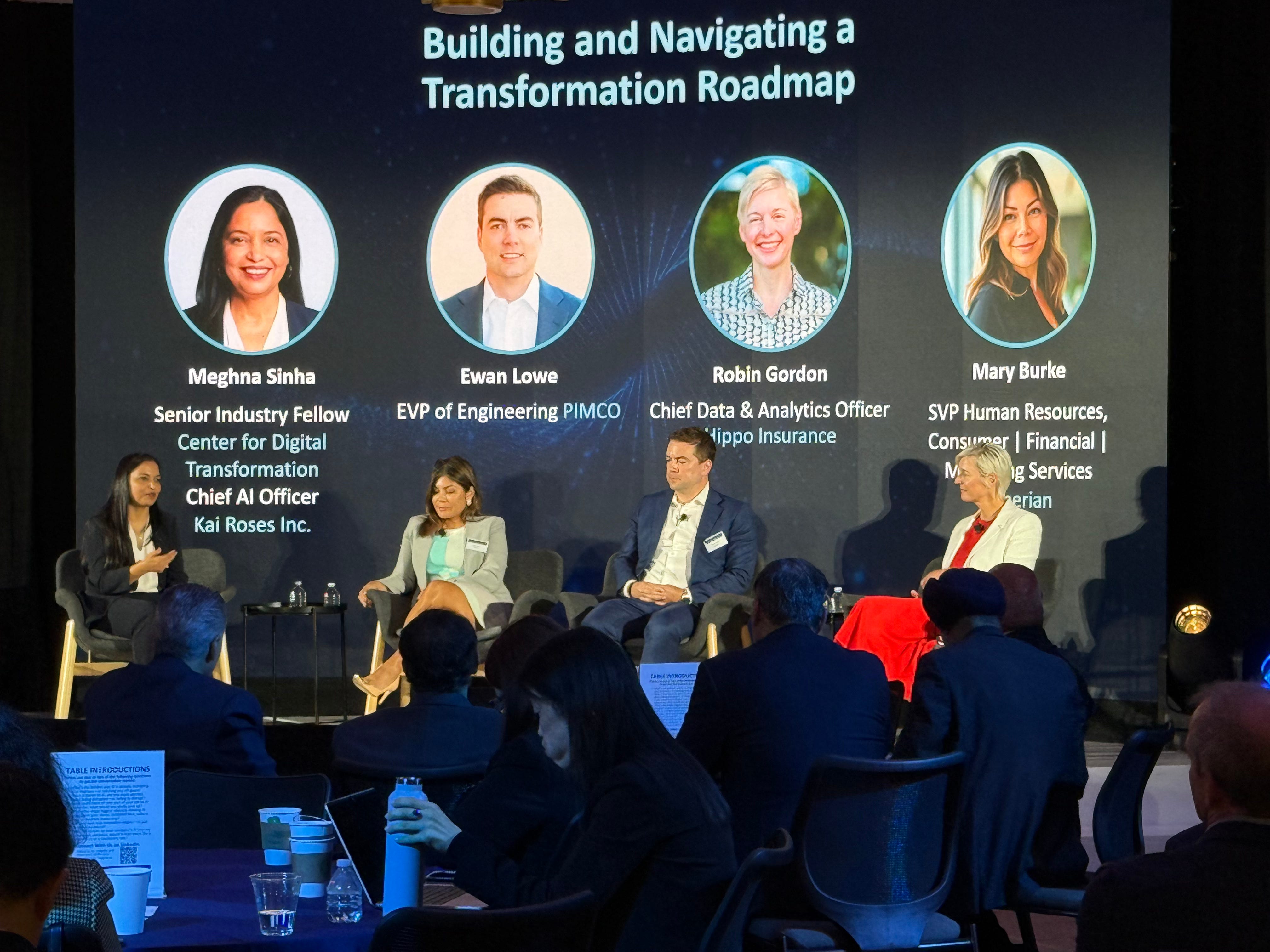
At the UCI CDT Conference, Left to Right (Meghna Sinha Chief AI Officer Kai Roses, Mary Burke, SVP HR Experian, Ewan Lowe, EVP Engineering Pimco, Robin Gordon, CDAO Hippo Insurance)
Board members highlighted the difference between silicon valley companies being laser focused on AI and other fortune 100 firms where the board is demanding regular AI progress as a standing topic. They highlighted that it’s no longer sufficient for only the technology or AI leader to cover these topics. They are demanding a mindset shift: all business executives, including the CEO, must now be hands-on with the data, rolling up their sleeves to understand and identify true, data-grounded opportunities.
However the massive, hoped-for transformation, the overhaul of the workforce, the establishment of robust governance structures for responsible AI is only getting started.
The Creator Economy as the Canary
The absence of serious, integrated discussion on Copyright and Intellectual Property (IP) Laws in the face of this powerful, multi-billion dollar, energy-intensive technology is baffling.
The famous Stanford paper, “Canary in the Coal Mine” by Eric Brynjolfsson1, indicated that entry-level software jobs would be the first to be severely impacted by AI. I believe that AI eating the creator economy is the true canary in the coal mine for all other industries and professions. If we allow a system to become established where massive value is created by dispossessing the initial creators, this blueprint can and will shape subsequent economies: healthcare, retail, logistics, and more.
This is the moment to demand a different structure: a new paradigm for governance and compensation. We must actively negotiate the creator economy we want, as this will define all subsequent human-AI collaboration models.
Moving Forward: Non-Negotiables for a Hopeless Time
We are, as many senior executives stated, in unprecedented times. Between labor market volatility, geopolitical tariffs, immigration impacts, and the sheer lopsidedness of technology investment, the passing of Dr. Goodall only magnified the sense of hopelessness.
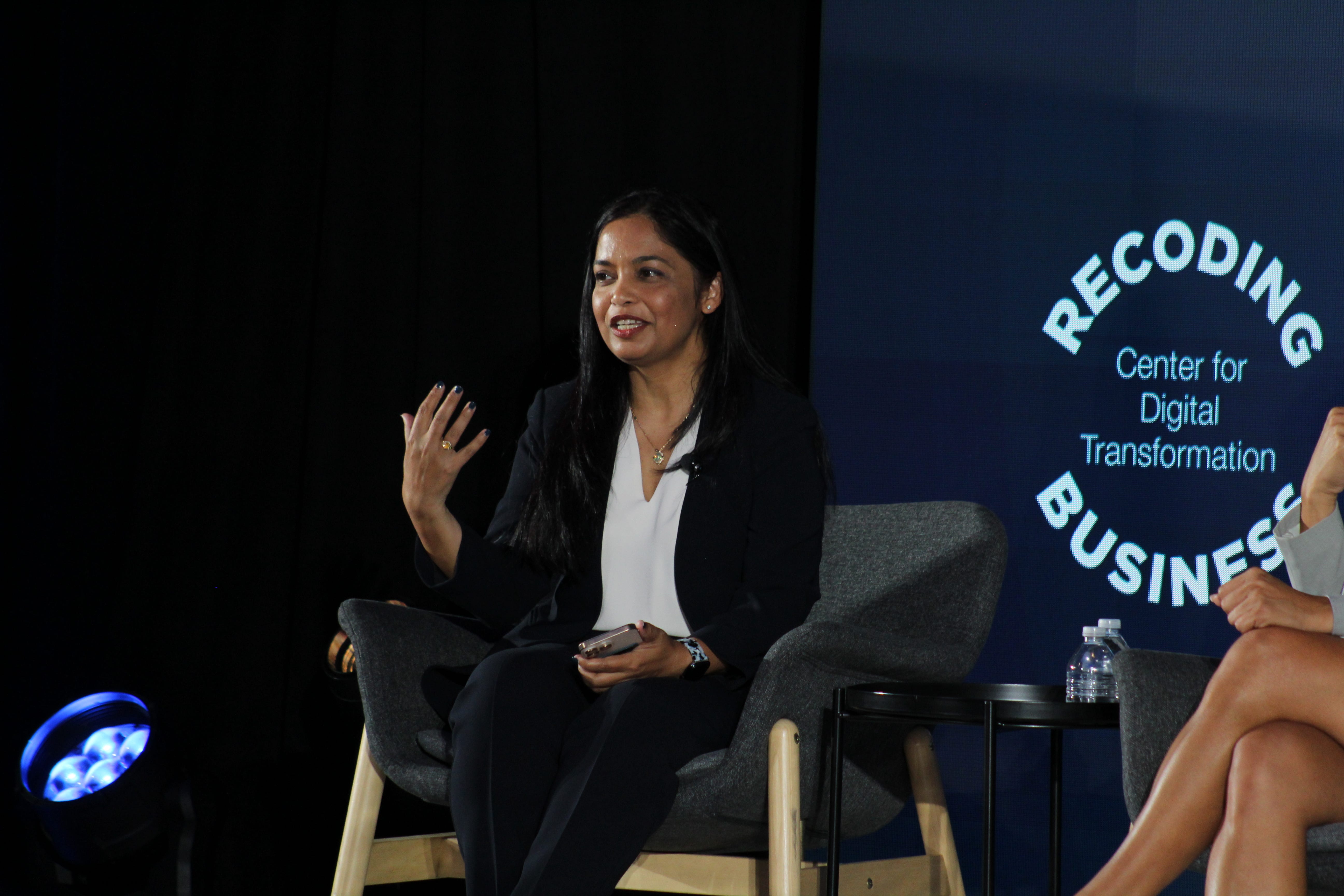
But the future we make is still dependent on the choices we make today. We have to move forward, and I see three non-negotiable closing thoughts for all of us:
Competing with AI is not optional. You must carefully consider the cost of delay in not prioritizing AI for yourself, your teams, and your organization.
Literacy is Action. AI literacy means more than just reading about it; it means using AI in your daily workflow. This is the only way to develop the intuition required to find its unique, domain-specific application. And the group that seems to be the most behind is the senior levels in many companies. Unless they actively engage and personally translate this technology’s meaning for their organization, no amount of consulting decks will drive meaningful transformation.
Rethink Determinism. We often categorize AI as a probabilistic technology set to replace deterministic processes. Yet, a complex human workflow governed by metrics, rules, and hundreds of people is not truly deterministic and perhaps more linear than it needs to be if we involve AI in the workflow. We made it deterministic through governance. We need to actively rethink the governance, metrics, and regulations for a mixed human and AI workforce, building a structure of conscience into this new foundation.
If we don’t demand better from the architects of this future, a future defined by equitable compensation, environmental transparency, and ethical governance, what, truly, are we optimistic about?
FootNote: The conference went deep into several case studies, and while I couldn’t do justice to the excellent stories from Turing, Dr Treat, Ralph Lauren, Reuter, Hitachi, and KPMG, my reflections focus on the overarching themes. Nicole Perlroth took us very deep down the cybersecurity rabbit hole which becomes even more urgent for business leaders to be knowledgeable and plan for in the agentic AI era. The panelist on supply chain and manufacturing with AI, solving new cybersecurity challenges in the AI Era and AI abundance future all offered valuable insights on progress, risks and the work we need to do to create a society we want for the next generation. I walk away more focused and crisp in my actions and intentions than every before.
About the Author: Meghna Sinha is Chief AI Officer Kai Roses, Inc. She specialize in developing business-aligned AI strategies and guiding organizations through comprehensive implementation plans.
About Kai Roses: Kai Roses was founded to incubate innovation and introduce springboard learning opportunities to young people so they can thrive during the 4th Industrial Revolution.
We are driven by challenges that create the greatest net positive impact on the world. We believe a future where creators are pushed out of the economy by AI-generated content is simply unsustainable. Our product mission is focused on solving this pain point; our consulting and foundation pillars support the company’s growth and mission.
Product: With the rise of AI content production and blockchain, we’re focused on building essential tools that help creators organize, protect, preserve, and monetize their work on their own terms.
Consulting: Dedicated to accelerating the responsible adoption of AI, our consulting practice guides businesses on their AI journey. We specialize in developing business-aligned AI strategies and comprehensive implementation plans to empower our clients to build lasting AI competency.
Foundation: We are deeply committed to AI literacy and responsible implementation. To further this commitment, Meghna serves as a Global Distinguished Fellow at AI2030, supporting their mission to mainstream responsible AI, and as a Senior Industry Fellow at the UC Irvine Center for Digital Transformation, to drive AI literacy at all professional levels.
https://digitaleconomy.stanford.edu/publications/canaries-in-the-coal-mine/