The Story of 明日の風 - ASHITA NO KAZE
In this article, Josh Friedberg, Chief Product Officer at Kai Roses, shares the story of ASHITA NO KAZE – an interactive, collaborative, generative world-building project he developed to explore the possibilities of today’s AI and blockchain tools.
The Concept
ASHITA NO KAZE (ANK) is an exploration of interactive, collaborative, generative world-building on blockchain. Our goal was to push the boundaries of what was possible with today’s AI and blockchain tools by experimenting with:
Interactive storytelling through a RAG chatbot
On-demand creation of unique generative art pieces
Breaking down language barriers with AI-powered translation
Seamless preservation, attribution, and ownership of the generated art on blockchain
Ashita no Kaze invokes the phrase “明日は明日の風が吹く.” Literally, "tomorrow’s wind will blow tomorrow," it embodies the idea of letting go of today’s worries, trusting that tomorrow will bring its own solutions.
The first version of ASHITA NO KAZE launched on April 11 with a counterintuitive marketing approach: just 16 tweets on X, all in Japanese, aimed at a primarily non-Japanese-speaking audience. It was a completely new user experience; the project interaction was wholly contained in a Telegram chat, there was no app or website. The art was both unique to every interaction and generated on demand, but processed to maintain a cohesive and recognizable aesthetic.
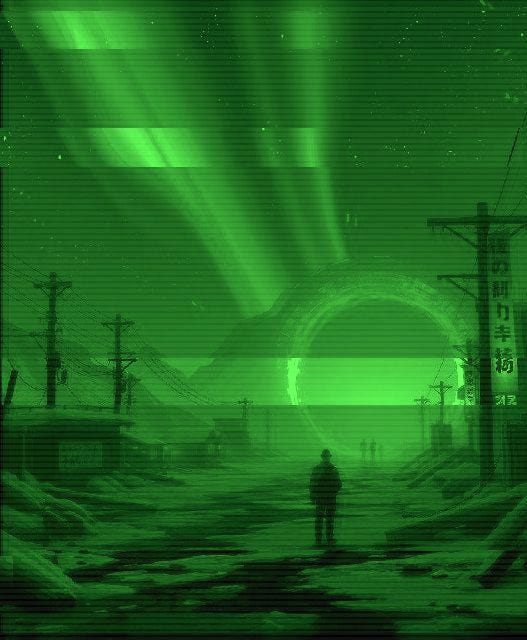
Upon launch, the novel approach drove substantial attention in the web3 space, and the engagement quickly overwhelmed the delivery pipeline. The attention also brought out the opportunists, and the contract was compromised by bots (smart contracts that were able to circumvent the mint security). After being live for a few hours between April 11-13, the mint contract was paused with only 215 of the intended 1234 pieces of art preserved.
Although the pipeline failure and the stress test from bots could be seen as negatives, they actually confirmed strong product-market fit, so I set out to rebuild the infrastructure from scratch. The goal was to develop a production-grade version that could handle thousands of simultaneous user interactions and prevent bot intrusion in order to deliver on the collection as it was originally envisioned.
It took just under 3 months to complete the upgraded version. I integrated dozens of products and services into a robust tech stack, powering a reasonably frictionless user experience contained entirely within a Telegram chatbot.
The relaunch of the project, ANK Transmission 2, saw over 1,500 people engage our Japanese-speaking bot, generating nearly 10,000 pieces of art through over 50,000 Telegram interactions. When I closed the interface, we stood at 1,028 one-of-one art pieces that carry the lore of the ANK story, preserved on blockchain. Between the two collections, the project has done over $40,000 in trading volume and sales since launch.
To the best of our knowledge, this is a first-of-its-kind deep integration of a chatbot that can handle multimodal storytelling, story generation, and artwork preservation on blockchain – all without ever leaving the Telegram app.
The Story
After a cataclysmic earthquake, the Shinsai, a parallel Tokyo is transformed into a fractured world where aurora flares light the sky, portals link time and space, and mythical creatures roam the streets. Survivors divide life into “before” and “after,” with many lost or vanished. Among them is L, a nocturnal wanderer who lost their family and now thrives in the spectral ruins, exploring by night under the glow of the rift.
Hope emerges in two forms: communication through the glowing portals and an unexpected spark tied to skateboarding. L discovers a hidden warehouse filled with pristine skateboarding gear from the old world and begins secretly distributing boards to fellow survivors. Each skateboard becomes a symbol of freedom and resistance, igniting a quiet revolution known as ASHITA NO KAZE (“Tomorrow’s Wind”).
Meanwhile, dormant bots stir in the city’s shadows, signaling deeper conflicts between humans, machines, and the mysteries of the rift. As whispers of rebellion spread, L unknowingly sets in motion events that will ripple across realities, carving a path toward renewal in a city where the “after” is not an ending but the beginning of something new.
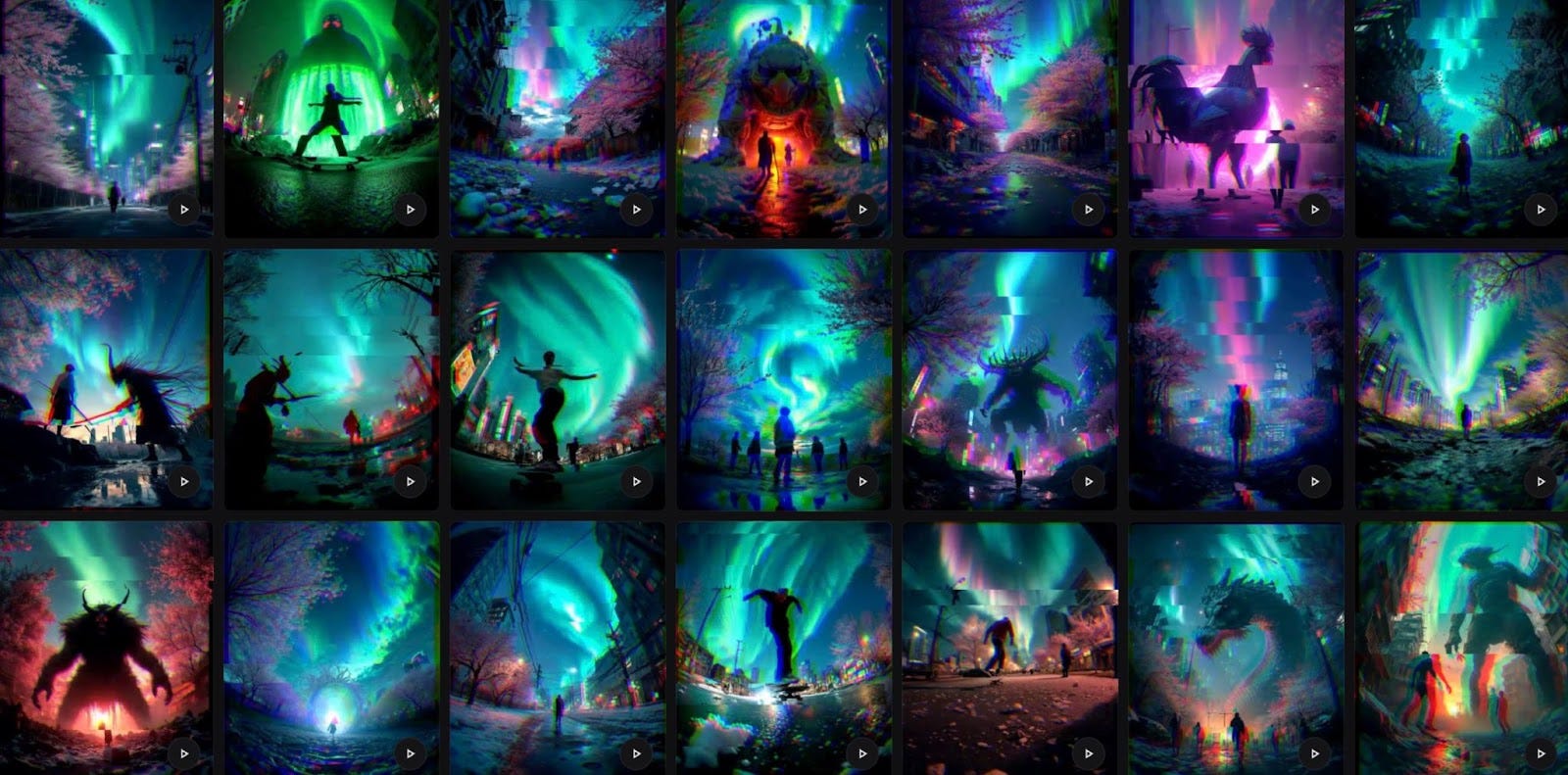
Guided by the RAG chatbot, users asked questions and contributed their imagination, generating over 1,000 unique images that visually represented the world of ASHITA NO KAZE. Below are some examples of the output. The Japanese description is baked into the metadata for each token and the English translation is provided for reference.
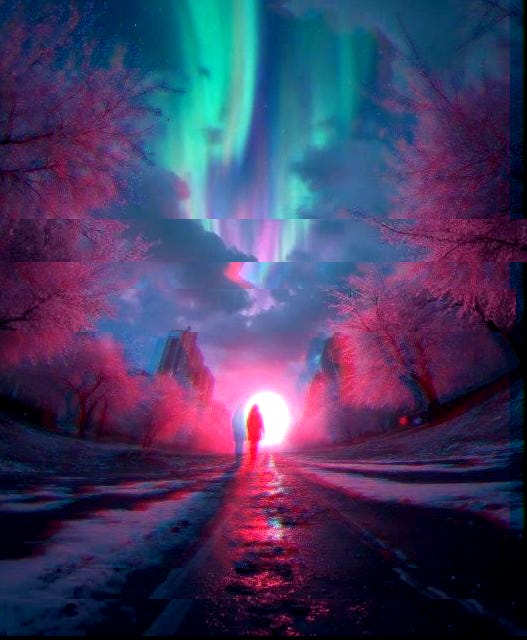
In the shadows of Tokyo's ruins, glowing portals appear beneath a vibrant aurora, radiating warmth and mystery, beckoning survivors with promises of connection and untapped power in a violently transformed world.
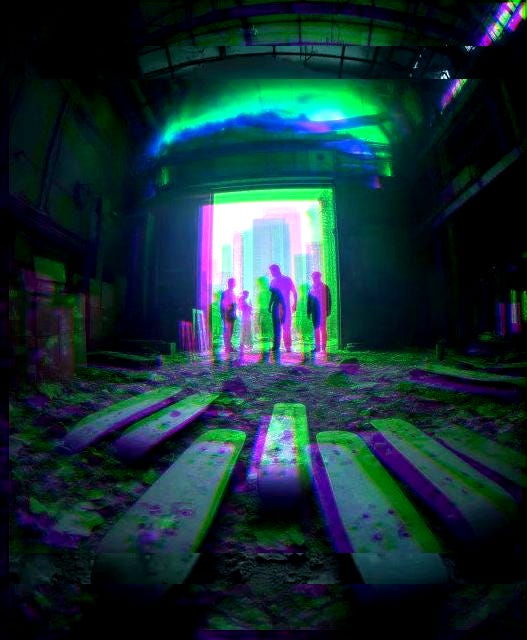
The secrets of the warehouse remain shrouded in mystery, its contents untouched from "before," with brand new skateboards standing as silent sentinels of a lost era, holding joyous memories in a time of present devastation.
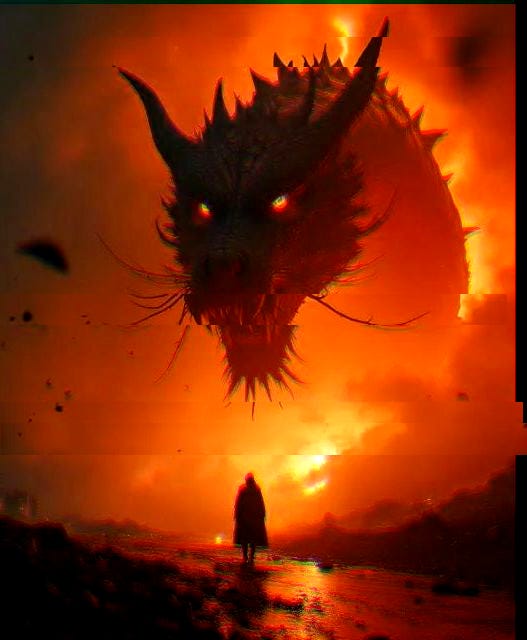
In this eerie scene, a fiery orange light engulfs the submerged ruins of Tokyo, creating an otherworldly atmosphere. A giant dragon looms before you, its cracked, melted skin trembling with rage under the gaze of blazing flames, its sharp claws poised to strike. It embodies the fear and despair of a city risen from ashes and darkness.
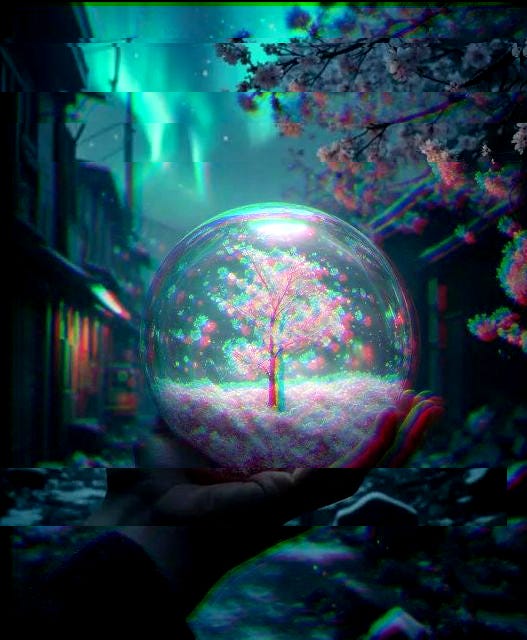
In the shadows of a ruined Tokyo, a delicate artifact takes shape: a transparent orb housing a cherry blossom that appears to shimmer with an ethereal glow as time passes, symbolizing both the fragility and resilience of life as spring breathes new hope into a recovering world.
The images run the gamut from simple cityscapes to mythical encounters, with a strong thread of skateboarding that hints at the evolution of the project, all underscored by a message of hope and connection in a fractured world. Explore the full ANK Transmission 2 collection on Opensea.
The Build
Here’s an overview of the infrastructure, tools, and services I used to bring ANK to life.
The primary UI runs in Telegram on the Telegram Bot API. The minting UI is a Next.js Telegram mini app hosted on Vercel. Authentication, blockchain wallets, and transactions are managed with Privy. The Alchemy API powered token eligibility validation and ownership verification. I used Redis to handle queuing and modularized all the main functions into microservices deployed on Railway including:
Dispatcher to consume the Redis queues and orchestrate the workflow, state management, and communication between the workers and the Supabase database
RAG Chatbot built on Flowise with OpenAI embeddings and a Pinecone vector database
Translation built with the Google Translate API
Image Generation using Flux 1.1 Pro through the Replicate API
Image Processing and asset uploads to AWS S3
Mint worker to process mint requests through validation, signature generation, and transaction encoding
I chose Railway because I could manage every worker in a single workspace and it allowed for independent horizontal scaling of each service.
The other core microservice was an AWS Lambda function responsible for creating a metadata JSON for each preserved artifact and uploading it, along with the MP4 and PNG to IPFS via the Pinata SDK. Lambdas scale to thousands of instances automatically, paired with S3 triggers along with SQS for persistence and error handling, it was the best solution to handle over 30,000 IPFS uploads.
Privy’s embedded wallet stack was integral in removing the complexity from the blockchain interactions. With it, I was able to seamlessly create a wallet for every Telegram user without any additional login process, eliminating the friction of onboarding users to a new app. Paired with ApeChain, a layer-3 Arbitrum Orbit chain we chose for its fast, inexpensive transactions and passionate NFT community, I was able to streamline the web3 infrastructure and allow users to mint their art as an NFT with zero prior knowledge required.
I used a Supabase edge function for the Telegram webhook along with the Telegram event data, user management, mint data, and support tickets. I used Hardhat for the Solidity contract development, testing, and deployment, Github for version control, and Cursor was my IDE.
A brief aside on vibe coding. I have coding experience, but I’m not a professional developer. This project would have taken years without an agentic coding assistant. I learned more about application architecture, scaling, and devops in 3 months than I would have ever imagined possible.
The real unlock of vibe coding is the ability to iterate on both design and engineering simultaneously.
I’ve always leaned into brute-force problem solving through iteration. Using Cursor, I could attack blockers through both vectors at virtually the same time. This allowed me to solve problems and create novel integrations that would have been impossible less than a year ago.
Special thanks to Spencer, Shpend, and Alok at ApeChain for their devrel support and Coffee, Quit, and James Hall for their smart contract guidance and moral support.
What's Next?
ASHITA NO KAZE will continue to evolve as an exploration of what's possible with AI and blockchain leading to some fun 3D and physical components rolling out in the next couple of months.
When we work on projects at Kai Roses we aren’t building for a single use or single user; our goal is to build projects that scale while creating useful tools for creators along the way. ANK Transmission 2 was no exception.
If you’re interested in creating your own interactive, collaborative, generative world-building project let’s talk. On the Telegram front, if tokengated chats, integrated support ticketing systems, broadcast messaging solutions, or chain-agnostic minting solutions would be helpful to you, let's talk.
If you have an ambitious idea and you don’t know where to begin, let’s talk.
About the author: Josh Friedberg is the Chief Product Officer at Kai Roses, Inc. A former professional skateboarder, he co-founded 411 Video Magazine (411VM), a seminal media platform in skateboarding. As Executive Director of the International Association of Skateboarding Companies, he led major cultural initiatives, including the Skateboarding Hall of Fame and Innoskate in partnership with the Smithsonian’s Lemelson Center for the Study of Invention and Innovation. He helped bring skateboarding to the Olympic Games as Skateboarding Director at World Skate and guided the sport through its Olympic debut as CEO of USA Skateboarding during a global pandemic.
In 2021, Josh embraced blockchain and NFTs, co-founding 288 Spirits in 2022, joining 10KTF in 2023, and leading Yuga Labs’ Made By Apes program in 2024. As CPO at Kai Roses, he is focused on building essential tools for creators.
About Kai Roses: Kai Roses was founded to incubate innovation and introduce springboard learning opportunities to young people so they can thrive during the 4th Industrial Revolution.
We are driven by challenges that create the greatest net positive impact on the world. As our portfolio has expanded, we are focused on three core pillars: Consulting, Product, and Foundation.
Consulting: Dedicated to accelerating the responsible adoption of AI, our consulting practice guides businesses on their AI journey. We specialize in developing business-aligned AI strategies and comprehensive implementation plans to empower our clients to build lasting AI competency.
Product: With the rise of AI content production and blockchain, we’re focused on building essential tools that help creators organize, protect, preserve, and monetize their work on their own terms.
Foundation: We are deeply committed to AI literacy and responsible implementation. To further this commitment, co-founder Meghna Sinha serves as a Global Distinguished Fellow at AI2030, supporting their mission to mainstream responsible AI, and as a Senior Industry Fellow at the UC Irvine Center for Digital Transformation, to drive AI literacy at all professional levels.